Friday, January 12, 2018

Funny Freestyle Tips

The Official Flocabulary Ten-Step Technique for Learning to Freestyle Rap

by Emcee Escher, esq.

Step 1. Start easy

No need to start off rhyming “the toasty cow’s utter” with “most o’ my flow’s butter”. No need to even rhyme. Just forget everything else and flow. The rhythm can be simple, the words might be second-grade level, but you’re still freestyling as long as you make it up. This was my first freestyle rap, which I spit when I was 11 months old:

I am funny,
I like bunnies, 
Touch my tummy, 
Mummy

Step 2. Keep flowing

You’re going to make mistakes. You’re going to sound stupid. Make your first freestyle rap verses your stupidest verses just to get them out of the way. Keep flowing. Can’t think of a rhyme? Keep flowing! Stutter over words? Keep flowing. It’s inevitable that at some point some of your lines won’t rhyme, won’t make sense, or that you will inadvertently diss yourself. (I knew one guy who accidentally dissed himself all the time when we were freestyling.) Just keep flowing. If you make a mistake, do your best to incorporate your mistake into your next lines like Eminem did on this freestyle:

I take a beat and loop it, 
I take a beat and choop it,
Choop it? What does that mean?
I don’t know but I got fat jeans on, 
And I already said that,
I don’t know where my head’s at,

Another technique to use when you find yourself in a bind is to whip out a quick filler. Fillers are just little phrases that you can insert occasionally to give you more time to think of a dope line. Every emcee has his own fillers. For example, Eyedea says “I grab the microphone.” Jin often says, “I’m (nasty) when I’m freeing.” I usually say, “You know what I’m sayin’?”

Try to come up with a few fillers that you feel comfortable using. They’ll bail you out of some awkward pauses. As you get better, you can rely less heavily on your fillers.

Step 3. Rhyme in your mind ahead of time

Here’s the biggest trick to freestyle rapping: as soon as you know what word you’re going to end line 1 with, your mind should start racing to find out a word you can use at the end of line 2. Let’s say your first line is, “I’m colder than a Dairy Queen Blizzard.” As soon as you realize that you’re going to end the line with “Blizzard,” you should immediately think of something that rhymes with that word and might possibly be related:

wizard
lizard 
scissor 
miss her 
pins hurt

Pick one and then try to carve the second line to lead toward that word. Let’s say you pick “wizard,” your next line might be:

I’m colder than a Dairy Queen Blizzard,
This is Lord of the Rings, you’re the hobbit, I’m the wizard,

If you pick “scissor,” you might say:

I’m colder than a Dairy Queen Blizzard,
A rebel since I was five, went running with scissors,

The real trick of freestyling is to have your mind constantly racing ahead of what you’re saying. This isn’t easy, but you’ll get quicker with practice.

Learn How to Rhyme and Rap
Step 4. Write

Writing raps will help you freestyle. When you write, rhymes become embedded in your head, and you’re more likely to be able to pull these rhymes off the top of your head in a freestyle.

For the most part, you should never spit a long pre-written verse at a cipher, but you can certainly use rhyming words and shorter phrases that you’ve worked out beforehand. When Proof rhymes “Ewoks, treetops, and Reeboks” in a freestyle, you better believe he’s thought of those rhymes ahead of time. He’s still freeing, but he’s using rhyme words he’d already worked out. 

Sitting down and writing every day will improve your freestyles. It will expand your memory of rhyming words, and it will give you experience working these words into clever lines. It’s also a good idea to write a few multi-purpose bars that you can spit at a freestyle in case you get really stuck. Put those lines in a “Break Out Rhymes In Case of Emergency” box, and smash the glass when you need help. This isn’t cheating; it’s shrewd.

When you’re writing these “in case of emergency” lines, make them strong and interesting, but not too ridiculously amazing. In other words, don’t do this:

Turn the beat up, it’s all that I need, (free)
Rocking my pumas … and my white tee, (free)
Hit or miss, this penetrates the uranium nucleus, (written)
Smoke crews like a hookah plus I’m nuking your crib,(written)

You don’t want your “emergency” rhymes to be that obvious. Try to write rhymes that generally match your level of freestyle but are clever and smart.

Step 5. Rap about things around you

This is definitely the best way to prove to the crowd that you’re really freestyling and not just spitting something you wrote in your room the night before. It’s also a huge crowd-pleaser, ‘cause it’s impressive and it makes everyone real glad that they’re hanging out with you. Rap about things you see. Incorporate objects, actions, people, clothing, situations, and sounds into your rap. When I’m in the shower, I’ll rap about what kind of soap I’m using:

Trying hard to get clean, maybe just a smidgen,
Make my Dove dirty, oh, now I call it pigeon

At a battle competition, this is crucial. You’ve got to spit things specific about your opponent. These are the hardest-hitting punches. Take Iron Solomon’s opening lines against The Saurus in a battle on the streets of New York. He looks his opponent up and down, sees that he’s wearing shorts, and then spits:

Maybe you should have come here rocking a better flannel,
Or at least some long pants,
You should have checked the weather channel.

One of the freestyle kings is a rapper from North Carolina named Spectac, who can spit a rhyme off the top of his head that sounds like it was pre-written. I’ve heard Spectac freestyle for 40 minutes straight over various beats, and I’ve seen him in action at a show, getting some kid to walk around the audience pointing at things and Spec rhymes about it. I asked Spectac what it takes to freestyle. Here’s what he told me:

“Honestly, first of all, you have to have a love for the music and not just the hip-hop genre. You have to love the instrumental. Once you have the passion for it, anybody can develop the ability to freestyle. It comes down to how much time you’re willing to invest in practicing that part of the art. When I’m freestyling, I’m thinking ahead. I’m definitely thinking ahead. At the same time, I don’t get too far ahead of myself. You try to enjoy it with the crowd. Enjoy the punch lines, but keep yourself focused on the fact that the party isn’t over.”

Step 6. Include metaphors

Metaphors and similes are an advanced but important part of freestyle rapping. They are often found in a rapper’s funniest and cleverest lines, and they really differentiate beginners from skilled emcees. A rapper like Lil Wayne lays down verses that straight-up drip with similes and metaphors. He’s the one who is balling like “Rawlings and Spalding,” who is a giant like “fee fi fo fum,” who is counting (money) all day “like a clock on the wall.” Not only does he drop lots of similes, he drops clever, original similes. So do like he does. Don’t just say “sharp as a knife.” Say:

I’m sharp as Samurai swords…
I’m extra sharp like cheddar…
I’m sharp as a Schick Quattro…

Metaphors and similes are really the backbone of an advanced rapper. Learn how to use metaphors correctly. Your rhymes will not only be funnier and smarter, they’ll sound better too. Take these lines from rapper Chingo Bling: “I’m fly like Big Pun on prom night with a cummerbund.” You know that is fly!

Step 7. Reference current events

Just as good as referencing something nearby is referencing something timely. Let’s say, for example, that you are at a cipher, rapping with some of your friends (dissin’ each other, just goofin’ around), and the day before you remember reading that Star Jones recently lost 200 pounds. How dope is it if you throw that in your rhymes:

You big now, but you ‘bout to get cut down,
Faster than Star Jones dropping 200 pounds

I recently heard an emcee reference soaring gas prices:

Fast? Son, that ain’t fast—
I’m rising faster than the price of gas

Whether it’s related to sports, politics, music or celebrities, if it’s in the news, reference it. As Wordsworth told me recently, “I just try to think of what’s important to the people in my surroundings and try to speak on it.”

Step 8. Pass the mic like it’s contagious

Rap in ciphers—groups of two or more rappers playing off each other, trading verses. This is a great way to improve, and it’s definitely fun. One of your friends can beat box, you can throw a beat on the stereo, you can search on YouTube for the instrumental version of your favorite song, or just freestyle over nothing. Take turns, cutting in whenever you want or when someone “passes you the mic.” (You probably won’t have an actual mic.) Never drop the invisible mic! Pick it up and pass it!

Work off other people’s rhymes. If they throw in something about the Bible, pick up that theme and run with it. Try to stick to similar topics, or riff off topics in creative ways. Expand on or reference their lines. When my friends and I cipher, we like to kick about random stuff that we all know about, like our personal lives.

Me:
Got no girlfriend, and girls are good for your health,
Know what I mean? Uh, at least I work for myself,
You see me here, kid, and I rhyme crazy,
Used to have a job reading to a rich blind lady,

Zach:
You rhyme crazy, and sometimes you rhyme lazy, 
But I love this rap game, ‘cause rhyming is my baby, 
Visually, lyrically I’m known as a mystery,
Y’all couldn’t even see me on HDTV,

It’s always good to pick up the rhyme scheme of the person right before you. In a great freestyle between Brooklyn rappers Mos Def and Talib Kweli (back when they were together as Blackstar), Mos Def ends his first verse asking Kweli if he’s with it. Kweli responds, “I’m always with it…” Later Kweli spits rhymes about some emcees looking wack, then he passes the mic to Mos who continues the rhyme, saying that they always look wack “cause look at the way they dress.” These are the best freestyles: raps that connect with the rhyme sounds and topic of the rappers around you. In the best-case scenario, the rhymes intertwine like the fibers in a Shredded Wheat biscuit.

Step 9. When you’re in a cipher, think ahead

One of the great things about rapping in ciphers is that after you spit one verse you get a break before you spit again. This break is your best friend. It’s during this break that you’ll be listening and responding to your friends’ verses. But you’ll also be planning out your next verse.

Whenever I’m in a cipher, I never like to get back on the mic until I’ve composed four to six quality lines in my head. To be most impressive, these lines will be about things around you, or they’ll be about something your friend said in his verse. Let’s say your friend is wearing a shirt that has Daffy Duck on it. While he’s spitting, you can write a line like this:

I know you’ve had a tough year and had some crappy luck,
But why you gotta wear a shirt with Daffy Duck?

That’s not an amazing line, but I guarantee you that in a cipher people will go nuts over that. (Make sure to point at his shirt as you say it.) I always try to think of two or three of those rhyming couplets before I spit again. Usually I’ll drop one right away and then use the other two later in the verse.

Step 10. Listen and practice

Freestyling, like sculpting or shooting three-pointers, takes an insane amount of practice. Practice as much as you can. Freestyle with homeless people, with your friends, and with your family. Listen to pro rappers who freestyle and try to analyze their styles. Rap all the time; practice all night and day. Practice might not make perfect, but it makes real good. Oh, and pick up The Rapper's Handbook for more lessons like this one. With examples from the pros, the book covers battling, wordplay, flow, recording, song-writing and more.

Saturday, December 30, 2017

Surround Yourself With $uccessful People


The people you surround yourself with will influence the way you live your life, so make sure you make good and successful friends. People who will help you and your career grow. Check out this video by the proprietor of Smart Rapper TV, Rob Level. PEACE!


Saturday, November 25, 2017

Rob Level | SmartRapper | His New Single "Way Up"


Rob Level has a youtube channel named Smartrapper TV, I have posted some of his videos on this blog before.  He gives a lot of good information for up and coming rappers and aspiring emcees.  If you are not already familiar with his music, Rob just released a new single entitled "Way Up."
His insights into the rap game are priceless, but his music is just as good.  This new single is possibly my favorite track of his to date.   Way Up is available on Spotify and iTunes now.

I like this particular song a lot though because all aspiring rappers can relate to it.  The single is about Rob's journey and what he faced on his way up to the top.  It helps one to remember we are not alone in having dreams and wanting to attain those dreams.  Rob Level has made it far in his career based on his own knowledge and ingenuity.

I would recommend listening to his new single here: https://youtu.be/YViin66f0bs

Also make sure to look up Smartrapper TV on youtube if you are looking to get help and advice on furthering your own rap career.  This is Rap Career Guide Dot Com after all and Rob Level is a highly recommended source of info.

Make sure to SUPPORT!
And follow Rob Level on IG at: https://www.instagram.com/Rob_Level/

Saturday, September 2, 2017

Why Is Having Haters A Good Thing

The top 5 reasons why you have haters if you aren't an asshole

Silky Johnson is our guide to tell us why you have haters. He should know. It's the top hater!
A hater is someone who discredits, devalues or downplays any improvements in your life. Your failures make a hater happier their own success. Haters need to see you go down to lift themselves up.
If you have haters, then the solution is simple: ignore them and keep doing what you do. If a hater can directly influence your plans, then your plans aren’t ambitious enough.
You can usually dismiss a hater. If you’re bored, you can harass them. If you’ve got nothing better to do, they’re great fun to troll. I don’t recommend wasting your time or energy on haters.
There is no magic wand to get rid of haters. There is no secret spell to win them over to your side. Some people won’t like you regardless of what you do. That’s alright. The world is a big place.
Many people wonder why haters exist. Why would anyone criticize the accomplishments of others? What motivates a hater to hate? What motivates a hater to hate on you, specifically?
If you’re a genuinely mean person, success isn’t the reason why you have haters. You have haters because you’re an asshole. Your success exposes you to more people, and those people also discover that you’re an asshole. If so, the following does not apply to your haters.
I present the top 5 reasons why you have haters. I’m warning you: once you understand them, then you will no longer feel confusion or even dislike. You’ll only feel sorry for them.

1. You Have Haters Because You Improved

Self-improvement always brings out the haters
This reason underpins all of the others. Everyone wants the good life. Few people are willing to do the work necessary to get a good life.
When you work hard and improve, you will get more of the good things in life. Rather than elevate themselves to your level, haters would rather drag you down. The quickest way to get haters is to succeed.
Since people aren’t willing to exert the effort required to get the best things in life, they have to believe that you were the recipient of a blessing. Average people will hate you because they think you are lucky. By definition, most people are average.

2. You have haters because you surpassed people.

The person who beats everyone else always has haters.
Your improvement may bother people who are used to you existing below their level. They may openly campaign for you to get your life together, but they secretly relish their superiority over you.
If you spend most of your time around people who care about you, you won’t have this issue. Close friends and family genuinely want you to succeed. Your casual peers will not because change disrupts the social order they rely on for their self-esteem.
When you move past them on the social ladder, they’ll feel a need to pull you down. Progress on the social ladder is almost always the result of progress in other areas of your life.
They will constantly remind you of things you did or ways you thought once the roles are reversed. Their hope is put you back where you were so that the balance of power is restored.

More help for dealing with haters

Find inner confidence and grow strong to stop caring what your haters think
Learn more about the book

3. People passed on you so now they hate you.

I can't imagine how many chicks passed on George Clooney who hate on him now
You often see this in the romantic realm. Once upon a time, you were interested in a person. This person did not return the interest.
If they’re nice, they friend-zoned you. If they’re savage, they ripped your soul to shreds. You got over it.
In the meantime, you improved into an attractive person. Now they want to give you attention. However, you aren’t interested because now you’re capable of attracting better. You also remember that they snubbed you.
These people morph into a diabolical type of hater. You’ve elevated yourself to someone worthy of their time, but you don’t want them. Since they missed the opportunity to have you, they get sour grapes syndrome when the situation is reversed.
They invent reasons why you aren’t worthwhile. This makes them feel justified in hating on you. After all, there must be something wrong with you since you’re no longer interested.

4. You weren’t supposed to become anything. You did, so now you have haters.

Rags to riches will make you a target for haters
If your life is on a downward spiral, people will write you off. I don’t condemn this because there’s no point in going down with a sinking ship if the captain is determined to destroy it.
If you manage to turn things around after the ship’s been abandoned, some interesting things happen.
Some people will be angry that you didn’t drown. They’ll hate that you’ve acquired a better life. You were supposed to be nothing. Instead, you became something.
This sounds similar to the “surpass people” motivation for hate. The difference is that you don’t have to surpass the person. You don’t need to fly higher; you just have to not crash.
These toxic personalities only feel satisfied when others suffer. If you come back to life after being left for dead, they need a narrative to explain why they abandoned you.
Rather than explain that you were a mess and wish you well, you have to remain the bad guy. It’s easy to hate the bad guy.

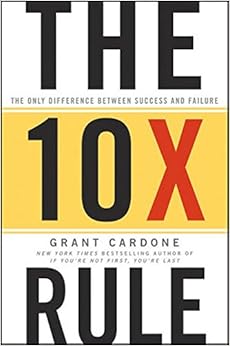
Grant Cardone built his fortune from the ground up. Learn how you can too.

You're gonna have haters anyway. You may as well get paid!
10x your life now!

5. You stepped away from the nonsense. Haters didn’t.

Maybe you weren’t the captain of the ship, but you were the first mate. Still, it was destined for disaster. One day you got smart and jumped ship.
For the rest of your days, you’ll be the worst type of human being to the individual or group you abandoned. Even though you acted in your best interest and became a better person, all they can see is that you’re now a traitor.
This is another reason why people remind you of what you used to be or where you came from. This is said to hold you down or to pull you back. If where you came from was trash, the other rats will resent you for escaping the sewer.
This list is not exhaustive, but if you’re experiencing unexpected hostility—especially from people you once or still do consider friends—these are the most likely reasons.

How to stop caring about haters

If you liked this post, you'll love my book, 'Not Caring About What Other People Think is a Superpower'
Learn more about the book

Make your thoughts known

Liked the post? Hated it? Go ahead and tell me in the comments down below.


reblogged on September 2, 2017

Wednesday, August 23, 2017

Guide To Promoting Your Music

The Ultimate Guide to Professionally Promoting Your Music

The Professional Way to Promote Your Music...
The following guide comes from Zach Hangauer, owner of Range Life Records, home to artists like White Flight, Fourth Of July, Suzannah Johannes and Say My Name.

Overview

The professional way to promote your music is to hire a publicist and a radio agent.  The catch is that you can’t just “hire” these professionals – they have to want to be hired by you!  And they can be expensive.  Ballpark “indie” rates range from $1,000-$4,000 for a publicity campaign and $1,000-$3,000 for a radio campaign.
So what do you do if you can’t afford to professionally promote your record (or can’t interest any publicists or radio agents because they’ve never heard of you and don’t want to have to create interest in you out of thin air)?

Do It Yourself.

Yes, it takes having to come up with a game plan.  And yes it takes a lot of mundane legwork.  And, sure, you’re probably not going to be quite as effective at promoting your music as a professional would be, since you don’t have their reputations or connections.  But it’s totally doable.  And if you’ve successfully made a record in the first place, you’re definitely capable of successfully promoting your record!

Step 1: Set a Release Date

Once you have your digital masters and/or finished product(s), take a look at the calendar and find a Friday (Fridays are the industry standard day for new releases) roughly 3 months away (3 months is a long-standing industry standard that allows you enough time to get set up, send press releases, service radio, make videos, etc — though things can happen a lot faster now, if you want them to). This is now your Release Date!
If you’re planning to release your record Digitally, and you plan to go through a Digital Distributor, and your Album Artwork is complete, now is a good time to start the Digital set-up process (it typically takes an hour or two to get signed up with a Digital Distributor and to upload your mastered .WAV or .AIFF files).
Your next task will be to assemble your assets, get your Electronic Press Kit together and begin letting publicity outlets know you have a new record coming out!

Electronic Press Kit 

Electronic Press Kits, or “EPKs”, consist of all the standard tools you’ll use to promote your record.  Your Album Artwork, Liner Notes, Bio, Publicity Photos, Music Video(s) and Remixes will all go into your EPK.  The best way to keep your Kit organized is to make a folder on your desktop, title it “EPK,” and anytime you create something that you plan to use promotionally, make sure it gets in that folder!

Album Artwork

For Digital Distribution, you’ll need to make your Album Cover a 2400 x 2400 pixel .JPG or .PNG file, at least 72 dpi and in RGB color mode (for physical printing, your file will need to be saved in CMYK).  From here, you can downsize the file to whatever dimensions you need for promotional purposes.
If you plan to post an image of your Album Cover on your website, in your social media, or in your press release, a best practice is to “Save for Web” in Photoshop to optimize the file size.  If you need help designing your artwork, try an inexpensive indie designer like Fiverr ($5-$40), a crowdsourcing site like 99 designs, or Tunecore offers an Album design service for $129.

Liner Notes

They typically include who played on the record, what they played, who wrote the songs, who recorded it, where it was recorded, who mixed it, who mastered it and any shout-outs and thank you’s. You’ll have options to input your liner notes when you set up your album with a Digital Distributor, Bandcamp and/or Soundcloud. Liner notes are also pretty standard to have in your artwork if you’re making any physical products.

Bio

Here’s a secret: whatever you write in your Bio and/or Press Release will be used, oftentimes verbatim, in any review or publicity you receive. So write your Bio exactly the way you want your audience to read it. In general, your Bio should be a paragraph or two that quickly covers who you are, where you’re from, any pertinent accolades or press quotes you’ve received and then your best attempt at making the record you’re promoting sound, in words, like something someone would want to take time out of their life to listen to. Be honest! Be thoughtful! Be concise! Let your bio serve as a time capsule of where your band is at – and leave it there, no reason to ramble on! P.S. I recommend that you write your Bio to be pretty interchangeable with your first Press Release.

Publicity Photos

If you’re fortunate enough to get any press, they’ll want a high-res (300 dpi at a standard photo size like 4×6 or 5×7) publicity photo or two, so try to be prepared. Nothing fancy – have someone take a few shots with a digital camera or smart phone and upload them to your computer. If you have a photo editing application like Photoshop (even iPhoto or Picasso will do), maybe crop it a bit, and adjust it to look its best. Be sure to save a few high-res options for press and then “Save For Web” copies of the photos to use in your social media and in your press releases.

Video

Music videos, however amateur, are a huge asset to your EPK and my advice is to either dedicate yourself to making one before your release date or find someone skilled and dependable in your social world to help make a video for you. Once it’s done, upload it to YouTube and/or Vimeo and then link to it in a press release and embed it on your website, and in your social media. (Even uploading a “music video” that simply shows your album art while the song plays is useful, since it allows your music to be discoverable (and monetizable) on YouTube.)

Remixes

If you know someone whose remix skills you admire, hit them up! A good remix of one of your songs is a great way to cross-pollinate audiences, deepen the interest in your album and is another excuse to drum up some social media and publicity buzz. Most people capable of doing remixes prefer to have “stems” of your songs. You can save everyone time by making sure, when you’re mixing, to bounce stems for anything and everything you think might be worth remixing. My advice is to move on getting any remixes going as soon as you’ve got your final mixes – it’s impossible to get them finished and into your EPK folder too soon!

Publicity

If you think you’d like to try hiring a Publicist, keep in mind that they are extremely picky about who they choose to work with (which is good, since they have to believe they can get you some publicity if they’re going to take your money!) And they are not cheap – expect to pay at least a few thousand dollars for a publicity campaign, and that’s for “Indie Music” publicists.
If you have the confidence in your record and the money in your budget, here’s a good list of cool Publicists to send an introductory email and listen-link to:Solid GoldChromaticForce FieldTerrorbirdToolshedPress Here,MotormouthStunt Company and Tell All Your Friends.
For the majority of bands, who are not able to afford or retain a Publicist, getting word out about your music depends on you.
Here is how to do it:

Creating Your Own Press Release

1. Research and make a thorough list of email contacts for all the Music Blogs, Magazines and local press outlets you want to send a press release to.
2. Make sure either the entirety of your album or whatever select songs you want to share are properly hosted at a linkable source (such as Bandcamp orSoundcloud).
3. Compose a paragraph or two announcing, describing and tastefully hyping your upcoming Album.
4. Compose an email to yourself that looks something like this:
Screen Shot 2016-06-28 at 11.19.30
If you have rich-text-editing capabilities in your email service (like GmailYahoo orMac mail), be sure to give the layout some Pop! If you need help inserting images into your email, here are instructions for GmailYahooMac mail, and Outlook.
5. Test it by sending it yourself. Make sure your links are working! Once you’re happy with it, create another email to yourself, copy/paste your content into the body of the new email, make sure the Subject line has all the right info, enter the email addresses you’ve researched into the BCC field and send it out! (Using the BCC field on an email addressed to yourself is recommended for bulk email send-outs. If you have specific blogs that you want to connect with, it’s a good idea to send an email addressed exclusively to each one, personalizing it however you see fit.)
Congratulations – you’ve sent out your first Press Release!

Now What?

Should you follow up? Absolutely, if you can do it tastefully and without expecting too much. Publicity outlets are under no obligation to be – or stay – in touch. It’s safe to assume that if someone wants to write about your music, they’ll let you know. The best follow up is another Press Release (or two), in the weeks and months leading up to and through your release date, letting them know about a Video or Remix or Tour Dates!

Newsletter Services

Some people prefer to use email/newsletter services like MailChimp (free), Mad Mimi(free) or Campaign Monitor (about $10 per campaign) for Press Releases. The benefits are the custom formatting they offer, as well as, if you’re into it, the detailed analytics they provide you about who is checking out your email and what they’re clicking on. One potential disadvantage is that these services make it easy for the bloggers you’re sending it to “unsubscribe”, and many will…

SubmitHub

SubmitHub is a service that attempts to connect your goal of getting your music heard by music bloggers to the music bloggers interest in being financially rewarded for taking the time to listen to your music.
There are two tiers: a free “Standard” option, and a “Premium” tier that starts at $1 per credit (a credit allows you to send one song to one blog in the network and ensures that you will, at the very least, receive listening notes back from them). Credits get cheaper the more you buy.
Either way, with SubmitHub you get the statistical satisfaction of seeing if and when your song has been at least listened to by any of the blogs in their network.

StoryAmp

StoryAmp is a free service that helps tailor your press release(s) and tour date info to Music Journalists and media outlets. Promoting your music through a service like StoryAmp – especially if you’re touring – can be a nice compliment to your own DIY music blog send outs.

Radio

To professionally service Radio, you need to hire a Radio Agent – but Radio Agents, just like Publicists, Booking Agents, Licensing Agents and Record Labels, are super picky about who they choose to work with. Simply being able to afford one is oftentimes not enough. They have to want to work with you. And if they’ve never heard of you, and you have no inside connections, they probably won’t be interested.
Is it worth a shot? Sure! Try sending an introductory email with listen-links to any of the Radio Agencies you’d like to hire. Typical Radio campaigns are a few thousand dollars (sometimes less, depending on duration and whether or not you’re sending out physical copies).
Here’s a list of cool indie Radio Agencies you can try reaching out to: Terrorbird, AAM,VitriolDistillerFanatic, Pirate!, Crowd ControlPlanetary GroupTinderboxA man A plan A canal and Team Claremont.
If you’re one of the majority of bands who can not afford, or can not pique the interest of, a Radio Agent, getting your music considered by radio stations depends on you.
Here is how to do it:

Submitting Your Music to Radio Stations

*You should submit your album to radio stations 4-6 weeks before your release date
1. Submit your music to Pandora.
2. Upload a few of your tracks to the always-influential L.A. radio station KCRW via their “Malcolm” Digital Submission program.
3. Research and make a thorough list of email addresses for all the College Radio andInternet Radio stations you’d like to contact.
4. Make sure a stream of your album is properly hosted at a linkable source such asBandcamp or Soundcloud. (If you want to keep your album private, you can do so on Bandcamp with Bandcamp Pro and on SoundCloud via their “Secret Links”.)
5. Upload a .zip file of your album in Mp3 format to your web server or to a fileshare platform like DropboxHightailMediafire or Google Drive – or create a Secret Download Link to your Album on SoundCloud.
6. Compose a paragraph or two announcing, describing and tastefully hyping your Album (can be the same as your Press Release).
7. Create an email to yourself that looks something like this:
Screen Shot 2016-06-28 at 11.29.15
8. Test it by sending it yourself. Make sure your links are working! Once you’re happy with it, create another email to yourself, copy/paste your content into the body of the new email, make sure the Subject line starts with “DIGITAL DELIVERY”, enter the email addresses you’ve researched into the BCC field and send it out! (Using the BCC field on an email addressed to yourself is recommended for bulk email send-outs. If you have specific stations that you want to connect with, send an email addressed specifically to them.)
Congratulations! You’ve successfully delivered your album to Radio.

Follow Up

If there are specific stations you want to follow-up with – in particular your local and/or favorite station(s) – check into the Station Manager’s office hours (Station Manager office hours are usually listed on the station’s website) or call in and talk to one of the DJ’s you like. (“Hey, I really love this station. I recently submitted some music to you guys and was wondering whether you’d had a chance to listen to it…”)
*Also worth considering: both Tunecore and CD Baby have easy and free options for servicing Internet radio, available to members and subscribers.

SEO & Social Media

SEO (Search Engine Optimization)

The “Search Engine Optimization for Music” theory is that your music is not something people discover on the web through random searches (“indie rock”, “chill electronica”) – rather, that people discover your music first (through friends, playlists, shows, blogs etc) and then take to search engines to search specifically for you. So it’s your goal to ensure that when you’re being searched for, you can be found.
Here is a bare bones strategy for optimizing your searchability (for more elaborate ideas, check out Dan Shure’s fantastic “Music SEO – 7 Lessons in Brand Optimization for 2015” article):

1. Create Your Own Website

Having your own Website, dedicated to your music, full of all of your keywords that the bots can crawl and index, is the fundamental way you can create and control your presence on the web. There are many options for how to do this, but here are 3 blueprints:
A) WordPress: Sign up for free, pick a theme, customize it with their customization tools and start putting your content in. Easy. Quick. Free — or, for $18/yr, add your own custom domain name (recommended — it would otherwise have “.wordpress.com” in your url). You can also buy more advanced templates for WordPress on their site or on ThemeForest. Be sure to tag your posts!
B) Squarespace ($12-$16/month) or Bandzoogle ($9.95-$14.95/month), give you all the hosting and quick-start template features of the WordPress option, with the additional features of free custom domain name registration, built-in eCommerce platforms and more advanced customization.
C) DIY: The basic costs of setting up your own site are your domain name registration fee ($10-$25/yr) and your hosting costs ($10/mo). Best practice is to select your host first and then register your domain through them – it’s usually the best deal. And then either use your web-skills to get everything designed and set up or get a friend’s help orCrowdsource a design or pay a professional (probably anywhere from $500-$1500). You can always get in touch with me – I’m a web designer and am happy to work with indie budgets – and I’ll see if I can help ðŸ˜‰

2. Push Your Data

There are a number of things you can do to make sure your music is indexed and optimized for search. Here’s a checklist:
  •  Contribute your music data to Music Brainz (free)
  •  Create a free account and submit your release info to Discogs
  •  If you’ve made CD’s, submit your CD and bio to the All Music Guide
  •  Create a Google+ brand page
  •  Add Google’s Structured Data to your website, specifying your logo/band image and social profiles
  •  Add Google’s Music Actions to your site, enabling your music to be played directly from a Google search
  •  Submit your lyrics to Musixmatch
  •  Link your content! In the “About” sections of your Facebook and Twitter accounts, link to your Website, SoundCloud, Bandcamp, webstore and YouTube pages — and vice versa!
  •  Tag your content! SoundCloud, Bandcamp, YouTube, Vimeo, Instagram, Tumblr, WordPress etc all allow to tag your content on their services with keywords, so be sure to do it!
  •  If you have an old MySpace account that keeps popping up in your searches – and you’re not actively using it – do us all a favor and send it packing!

3. Social Media

In promoting your music, you should use any and all Social Media services that speak to you — there are no rules!
Three services, however, are particularly vital for musicians:

SoundCloud

SoundCloud makes your music searchable, accessible, linkable and embeddable. If you look at sites like Pitchfork and Stereogum, the vast majority of the music they promote is being hosted by SoundCloud. It’s free, easy to sign up, provides basic analytics, allows you to make your music streamable and/or downloadable, provides you with custom and easy-to-share links to your music, and works seamlessly with FacebookTwitter, blogs and other social media outlets. SoundCloud is also a cool forum for connecting – it has all the follow, re-post, like and comment features of a social network, plus you can send tracks to music media outlets and other artists on SoundCloud via SoundCloud Messaging.
Note: when putting your music on SoundCloud, be sure to put links to buy the song/album, links to your website/other social media, and any other relevant info about the song/album in the about entry field, so that the info appears as additional content. Hereis an example.

Bandcamp

Bandcamp provides you with a free, customizable storefront for selling your music and merchandise. Like SoundCloud, it’s another way of ensuring that your music is searchable, streamable, linkable and embeddable. You can use Bandcamp as your exclusive storefront for downloads and merch or use it as a complimentary service to your Digital Distribution. Links to your music on Bandcamp can be shared throughout your social media, in your press releases, and on your SoundCloud and YouTube pages. (You should also link out, from Bandcamp, to your website and other social media profiles.)

YouTube

Posting to YouTube allows the visual component of your music to be searchable, shareableand potentially monetizable. It’s even useful (in terms of “search”) to make “videos” for your music that simply show your album art while a song plays! Yes, Vimeo is also cool, but having a YouTube Channel for your band is fundamental. Be sure to take advantage of YouTube’s Analytics, and follow the advice from their Creator Academy. And definitely link to your website, storefront(s), Bandcamp and SoundCloud from your YouTube profile and in the descriptions for each video! (Here’s a good example.)
With these bases covered, you’re ready to rock.

Good Luck!!!


re-blogged by @skaz1official

August 23, 2017